The Beautiful Prison of The Age of Innocence
Behind the beautiful drawing rooms and impeccable manners of old New York lies a question that still feels remarkably modern: How much of ourselves are we willing to surrender simply to belong?
There is something intoxicating about entering the world of Edith Wharton's The Age of Innocence.
We step into the drawing rooms of 1870s New York, where dinner invitations carry enormous significance, opera boxes are places to see and be seen, flowers communicate what cannot be spoken aloud, and the smallest breach of etiquette can become the subject of conversation for an entire social season. It is a world of beautiful homes, exquisite clothes, carefully arranged tables, and impeccable manners.
From the outside, everything appears perfect.
But perfection, Edith Wharton reminds us, can have a price.
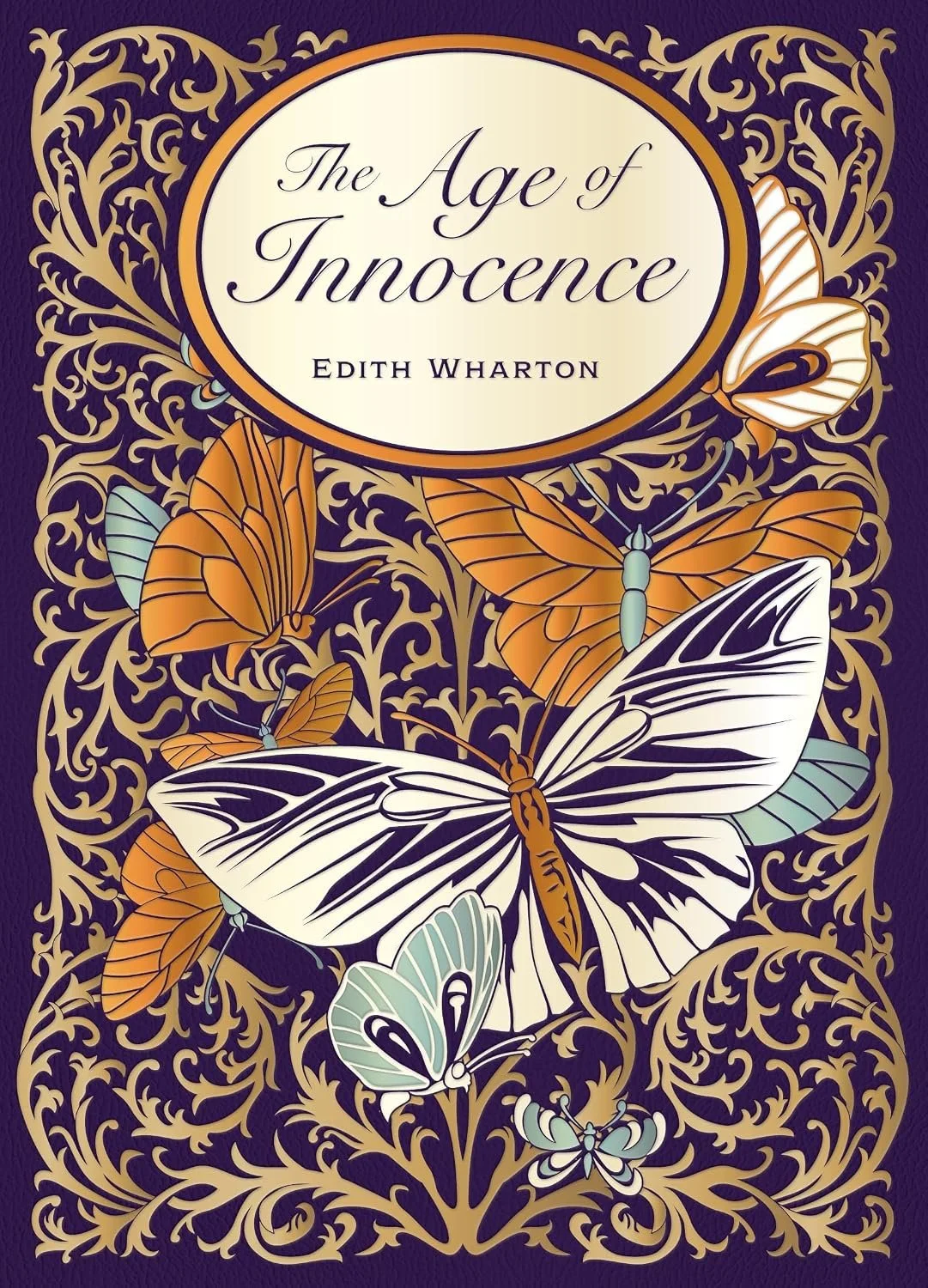
At the center of the novel is Newland Archer, a young man comfortably positioned within New York's privileged society and engaged to the beautiful May Welland. Their future appears to have been decided almost before either of them had the opportunity to imagine anything different. They will marry, establish a respectable home, attend the right dinners, know the right people, and continue the traditions expected of them.
Then Countess Ellen Olenska returns to New York.
Independent, unconventional, and unwilling to quietly follow every rule society has written for her, Ellen represents something Newland has rarely allowed himself to consider: another way of living.
Suddenly, the life that once seemed perfectly arranged begins to feel remarkably small.
That is where The Age of Innocence becomes far more than a beautifully written story about old New York society. Beneath the elegant dinners and formal visits is a deeply human question: What happens when the life everyone expects us to live is no longer the life we want for ourselves?
More than a century after the novel was published, that question still feels strikingly familiar.
Society may have changed, but expectations have not disappeared. We are still surrounded by ideas about when we should marry, what success should look like, how women should behave, how men should behave, what kind of life is considered respectable, and which choices will earn the approval of the people around us.
Sometimes those expectations are spoken aloud.
Sometimes they are simply understood.
Wharton understood the extraordinary power of those unspoken rules.
The characters in The Age of Innocence rarely need to shout or openly confront one another. A carefully worded invitation, a polite refusal, or a glance across a room can carry the weight of an entire argument. Everyone understands the rules of the world they inhabit, and everyone understands the consequences of breaking them.
That restraint is part of what makes the novel so compelling.
The beauty of the world Wharton creates is undeniable, yet beneath it lies something almost suffocating. The magnificent homes, elegant dinners, and carefully observed traditions begin to resemble the walls of an exquisitely decorated prison.
And perhaps that is what makes Ellen Olenska so unforgettable.
She is imperfect. She is complicated. But she has experienced enough of life to understand that appearances and happiness are not always the same thing. Her presence challenges Newland to question everything he has accepted without examination.
How much of our lives do we choose for ourselves?
And how much do we choose because we are afraid of disappointing everyone else?
Perhaps that is why The Age of Innocence continues to resonate. It reminds us that living beautifully and living authentically are not necessarily the same thing.
A beautiful life cannot simply be one that looks beautiful from the outside.
It must also feel like our own.
There is nothing wrong with tradition. There is nothing wrong with beautiful homes, elegant dinners, good manners, or the rituals that connect us to the generations who came before us. In fact, those are some of the very things that make Wharton's world so irresistible.
The danger comes when beauty becomes performance.
When belonging requires silence.
When respectability demands that we abandon ourselves.
Edith Wharton understood that some of life's greatest heartbreaks are not dramatic at all. They are the lives we almost lived. The words we almost said. The people we almost became.
Perhaps that is the quiet tragedy at the heart of The Age of Innocence.
It is a story about love, certainly.
But it is also a story about courage.
The courage to question the life that has been chosen for us.
The courage to recognize when tradition has become limitation.
And the courage, when we are fortunate enough to have the choice, to create a life that belongs entirely to us.
Because the most beautiful room in the world can still become a prison if we are not free to be ourselves inside it.