The Love at the Heart of Beale Street
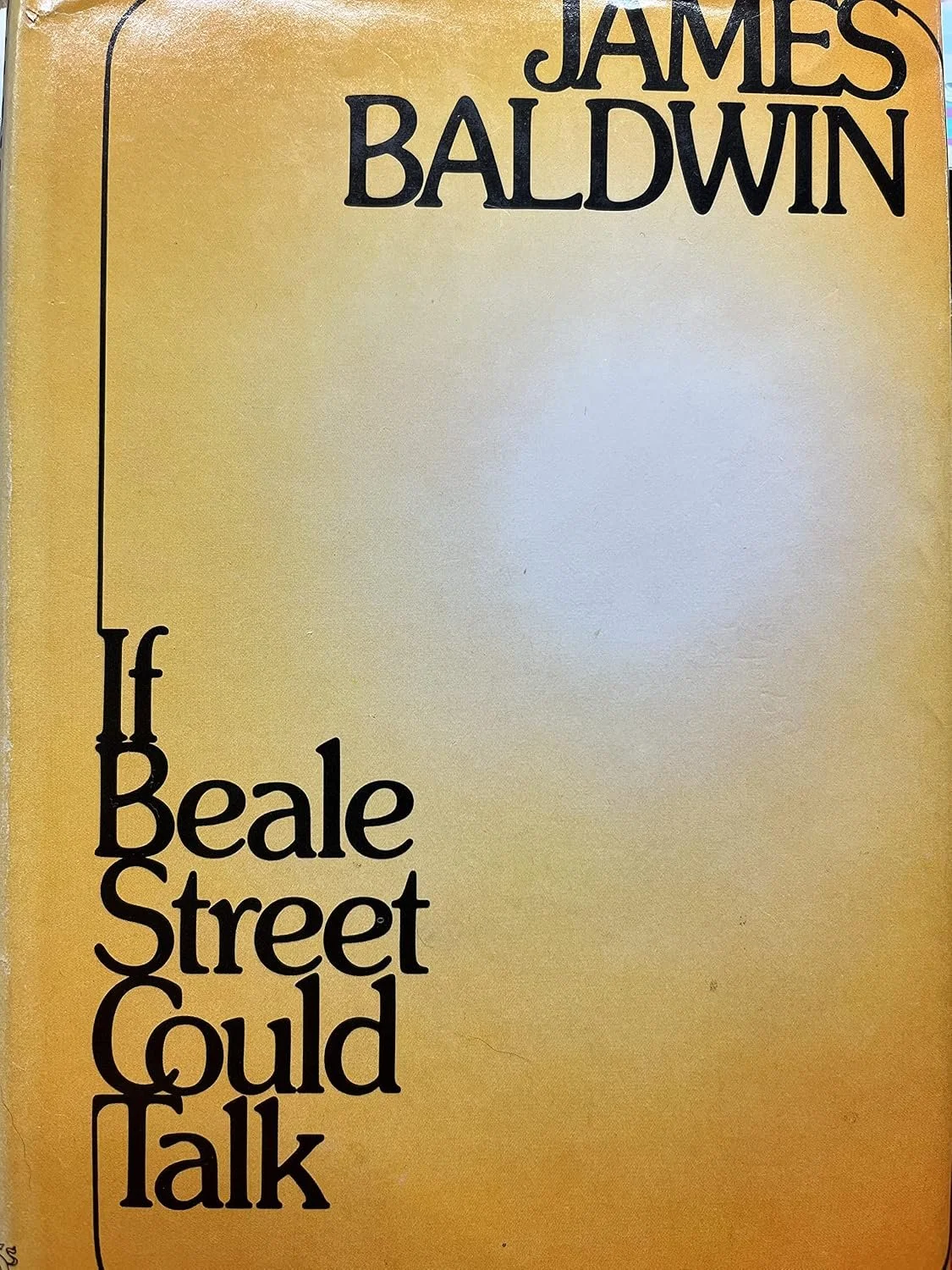
In a world capable of extraordinary injustice, James Baldwin gave us something equally powerful: a love that insists on surviving.
There are love stories that exist in beautiful places, surrounded by grand gestures and perfect circumstances. And then there are love stories that become extraordinary precisely because the world surrounding them is anything but.
James Baldwin's If Beale Street Could Talk belongs firmly to the latter.
At the center of the novel are Tish and Fonny, two young people in Harlem whose love for one another is tender, intimate, and filled with the possibility of a future they are only beginning to imagine. They dream of building a life together, of finding a home, and of creating something that belongs to them.
Then everything changes.
Fonny is falsely accused of a crime and imprisoned, leaving Tish, who is pregnant with their child, and their families to fight for his freedom.
In another writer's hands, this might have become solely a story about injustice. And certainly, Baldwin does not look away from it. He writes about racism, inequality, and the devastating consequences of a system capable of taking away a person's freedom and altering the course of an entire family's life.
But Baldwin also gives us something else.
Love.
Not the polished, uncomplicated love we so often encounter in romantic stories, but love as an act of endurance. Love that shows up. Love that waits. Love that fights. Love that refuses to allow the cruelty of the outside world to determine what happens within the heart.
Tish's love for Fonny is at the center of the story, but the novel also reminds us that love takes many forms. There is the love between families, the fierce determination of those willing to fight for someone they believe in, and the quiet sacrifices people make when someone they love is in trouble.
Perhaps that is what makes the novel so moving.
Baldwin understood that when the world attempts to strip people of their dignity, loving someone can become its own form of resistance.
There is something incredibly powerful about that idea.
We often think of love as something soft. Something romantic. Something expressed through flowers, beautiful dinners, handwritten letters, and whispered promises.
But love can also be fierce.
It can sit beside you when life becomes unbearable.
It can stand beside you when everyone else walks away.
It can remind you who you are when the world tries to tell a different story about you.
And it can continue believing in tomorrow when today feels almost impossible.
Baldwin's New York is not the polished city of postcards and romantic films. It is complicated, alive, beautiful, and deeply imperfect. Through Tish and Fonny, we see a city where dreams exist alongside injustice and where people continue to build lives, create art, fall in love, and imagine futures for themselves despite the obstacles placed in their way.
That tension is part of what makes Baldwin's writing feel so timeless.
If Beale Street Could Talk was published in 1974, yet the questions it raises about justice, race, family, and whose innocence is believed continue to resonate. Baldwin does not offer easy answers. Instead, he asks us to look closely at the human beings behind the headlines, the statistics, and the systems.
He asks us to care.
And perhaps that is one of literature's greatest powers.
A book can take a life completely different from our own and, for a few hundred pages, ask us to inhabit it. To listen. To understand. To see the world through another person's eyes.
When we finish If Beale Street Could Talk, we remember the injustice at the center of the story.
But we also remember the love.
The love that remains when circumstances change.
The love that refuses to disappear when life becomes difficult.
The love that insists that another person is worth fighting for.
Perhaps Baldwin's greatest reminder is that love cannot protect us from everything.
But sometimes, when everything else has been taken away, love is the very thing that reminds us we are still here.
Still hoping.
Still fighting.
Still believing that tomorrow can be different.
And perhaps that is why Beale Street continues to talk.
Because we still need to listen.